Solutions

Archive and retrieve communications securely with cloud-native speed.

Orchestrate real-time, compliant interactions across every channel.

Simplify and standardize trade and relationship documentation workflows.

Industries

Improve customer engagement across policy, billing, and claims.

Create and deliver personalized, compliant customer communications at scale.

Heighten citizen experience with digital transformation.

Improve customer engagement across utilities.

Resources

Browse popular market research, articles, videos, written guides and more in one convenient location.

Explore upcoming events, webinars, and customer experiences shaping the future of customer conversations.

Get the latest updates on Smart Communications, including product news, and industry recognition.

Company

Learn more about our company, our leadership and how were growing the team!

Analysts

Access analyst research, market reports, and industry recognitions featuring Smart Communications.

Is Your Food More Traceable Than Your Data? Why Data Provenance Matters for AI and Compliance

By Sally Schulte, Senior Product Marketing Director

When you go out for a meal, you assume that someone, somewhere, could tell you how the ingredients got from the farm to your plate—and prove to you that the food is safe to consume. And strict regulations like the FDA’s Food Traceability Final Rule and the EU’s Regulation 178/2002, coupled with sophisticated tracking systems, mean your assumption is probably correct. From the farm or ranch to the store shelf or restaurant, every step is logged, verified, and auditable.

But what about your company’s data? Like the food you consume, your company’s products and services exist in a heavily regulated market, chock full of checks and balances. But can you provide the same level of traceability for the data flowing through and being consumed by your organization that your local grocers can for the food on their shelves?

For most organizations, the honest answer is “no.” In most cases, the food on your plate is far more traceable than your data—and that’s a growing problem, especially as enterprises race to gain efficiency by sharing data across the organization, use data to drive automation, and feed data to train new AI tools.

This blog explains why data provenance has become a critical requirement for regulatory compliance, trustworthy AI, and sound decision-making. It explores how poor data traceability creates risk as organizations scale automation and AI initiatives, and why tracking data origins and usage is foundational to responsible business processes.


The Data Provenance Problem

Roughly 403 million terabytes of data are generated daily (that’s 4.03 x 10²⁰) as part of today’s business processes, with the volume of data stored globally doubling approximately every four years. And there are innumerable data sources: customers, advisors, agents, approvers, third-party contractors, etc. But ask where a specific dataset originated, if it’s been manipulated in any way, or whether it’s up to date, and you’ll likely be met with blank stares.

This lack of “data provenance”—the ability to trace data back to its original source—has serious consequences. Without it, data can’t (or shouldn’t) be trusted. And if data isn’t trustworthy, it shouldn’t be shared, reused, or leveraged to train AI systems that depend almost entirely on quality inputs. (Related reading: “Why Data Quality and Data Literacy Matter—For Everyone in Your Organization.”)

Imagine training an LLM on data that was scraped from unverified sources, or worse, on information that violates data privacy laws or internal policies. The consequences go beyond ethical or compliance issues: The outcomes become technical and strategic nightmares. Models trained on untraceable data risk embedding bias, misinformation, or even legal liability.


Why Data Traceability Matters More Than Ever

Traceability ensures that organizations can answer three critical questions about their data:

    1. Where did the data come from? — The original source, owner, and collection method.
    2. How has it been changed? — The transformations, filters, and enrichments applied along the way.
    3. Can the data be trusted? — Whether it meets quality, timeliness, and compliance standards.

Without this lineage, enterprises operate blind. Teams waste time debating data definitions. Business decisions rely on outdated or inconsistent numbers. And AI teams spend more time cleaning and verifying data than building models.

In regulated industries, traceability isn’t just good practice, it’s a requirement. From international laws such as GDPR and PIPL to regional regulations like the Sarbanes-Oxley Act in the U.S. and the Privacy Act in New Zealand, governments are holding companies accountable, requiring them to prove data origins and usage. Yet even with tight government requirements, full data lineage remains a challenge.


We’ve Solved Harder Problems, So Why Not Data?

The irony is that, as a global society, we’ve solved far more complex traceability challenges in other industries. Food, pharmaceuticals, and aerospace all manage supply chains that span continents, yet they can track every component from origin to destination.

If a batch of lettuce is contaminated, it can be traced back to the exact farm and field in hours. If a jet engine part is faulty, it can be identified and replaced before it causes harm.

So why can’t we do the same with data?

The answer lies in legacy systems, siloed architectures, and the sheer speed of data creation. But new tools—including metadata management platforms, data catalogs, and AI-driven lineage mapping—are beginning to change that.

In this context, the interoperability of forms automation solution SmartIQ™ lends itself to being a key factor in this improved connectivity, offering a way to trace precisely when and where information entered the organization, from whom and in what context. Companies can determine what steps were taken to validate identity, and they can replay data submissions in the context in which they were originally submitted.


Data Traceability: The Foundation for Responsible Business Decisions and AI Initiatives

As enterprises test the boundaries of workflow automation and explore how to safely integrate AI, trustworthy data will determine who succeeds and who stumbles—because you can’t build responsible business processes with data that can’t be traced to an authenticated, original source.

Just as we demand to know where our food comes from, the institutions protecting our financial and physical investments should demand the same transparency for the data being used to make critical business decisions. If they don’t, our steaks may be more traceable than our spreadsheets, and that should make every business leader a little uncomfortable.

Ready to improve data accuracy and traceability at the source? Explore our “Ultimate Guide to Forms Automation” to learn how you can streamline data collection, enhance customer experience, and ensure data provenance and compliance.


Frequently Asked Questions

1) What is data provenance?

Data provenance is the documented history of data, revealing its origin, movements, usage, and transformations. Data provenance offers a way to determine when information was provided, how it was provided, and by whom. This ultimately validates data’s authenticity and reliability, which separates it from data lineage (more focused on flow). Data provenance is focused on why and how data was originally created.

2) Why is data provenance important?

Tracing data to its origins and understanding how it has been used or applied is essential to meet today’s regulatory requirements, particularly in the financial services, healthcare, and insurance sectors. Data provenance helps ensure data is valid and can be used with confidence to drive business processes and decisions. Data provenance is also a fundamental pillar of most data governance strategies.

3) How does SmartIQ improve data provenance and traceability?

Interoperability—and the ability to automatically transfer data to the systems and people that need it, when they need it—is essential to improving overarching data traceability. By removing manual intervention and automatically passing data through secure connections, SmartIQ lets critical data provenance details follow information through a process, and those details can be stored and recalled for auditing and compliance in the future if necessary. Read the SmartIQ solution brief.


Reinventing Enterprise AI: Key Takeaways from AWS re:Invent 2025

By Simon Tindal, CTO, Smart Communications

This year’s AWS re:Invent made one thing clear: We’re entering an era defined not just by AI adoption, but by AI accountability, observability, and real-world value.

From keynotes to analyst sessions to roundtables with fellow CTOs and CIOs, a few clear themes emerged about where enterprise AI is heading next, and what leaders should be thinking about as they plan for 2026 and beyond.

Here are my key takeaways:


1. Agentic AI needs guardrails, not just power

A lot of the buzz this year centered on intelligent agents and their ability to take action, not just generate content. The big question that kept coming up was, “How do we trust agents to act autonomously without losing control?”

AWS introduced new capabilities focused on observability. In practice, that means being able to see what agents did, how they reasoned, and where their behavior drifted from what was expected. This shift from “can we build an agent” to “can we understand and explain what it just did” is a very important one.

For enterprises, especially in regulated industries, this is where AI maturity will be won or lost. It’s not enough for agents to be clever. They need to be auditable, predictable, and accountable.


2. Don’t just automate the status quo. Reimagine the workflow.

A recurring message across the event, especially highlighted in a strong session from Forrester, was that simply recreating your current processes with AI is a missed opportunity.

Most organizations begin with the idea of “let’s take this process and make it faster.” That can be a good starting point, but it’s not where the real value is. The more impactful questions are:

    • If we were starting fresh, without the constraints of legacy processes, how would we design this today?
    • What could agents do that we would never expect a human to manage manually?

This mindset shift, moving from basic automation to genuine reinvention, is what will transform onboarding, claims, servicing, and other complex workflows. It’s not about shaving a few seconds off a task. It’s about changing the experience entirely.


3. Pricing and ROI are shifting toward outcome-based value

Another theme that surfaced repeatedly was the need for AI pricing that feels predictable. There was a lot of discussion about a long-term goal within the industry: moving from consumption-based pricing toward outcome-based pricing.

That could mean tying value to improved NPS, shorter onboarding times, higher first-contact resolution, or other business metrics that resonate with executives outside of IT.

This evolution will take time, but it reflects an important reality. AI investments are no longer purely experimental. Leaders want to understand:

    • What outcomes will this drive?
    • When will we see value?
    • How predictable is the spend compared to the benefit?

Any AI strategy that cannot answer those questions in straightforward business language will struggle to earn long-term support.


4. AI is now everyone’s job, not just IT’s

One theme that came up again and again, both in roundtables and in hallway conversations, is that AI can no longer sit solely within technical teams.

For AI to succeed at scale, it needs to be:

    • Expressed in simple, business-friendly terms
    • Built into the tools frontline teams already use
    • Governed in a way that is transparent and easy to explain

AI may be technically complex, but the experience of using it should feel straightforward to the people closest to the customer.


5. Empathy still matters: the Kando principle

One session from Sony really stuck with me. It centered on the idea of Kando, a Japanese word that captures the feeling of being deeply moved or inspired. It’s the sense of awe you get when something delivers exceptional quality or significance.

The core message was clear. Even as automation and intelligent agents become more capable, emotion and empathy still matter. This is especially true in customer communications, where moments of clarity, reassurance, and understanding can define the experience.

Whether someone is applying for a loan, updating a policy, submitting a claim, or handling a difficult situation, how an interaction makes them feel is often just as important as the information being exchanged.

AI can help scale responsiveness and personalization, but it should never remove the human element. The goal is to design experiences that are both efficient and emotionally intelligent.


6. SmartIQ Agent at re:Invent: modernizing legacy workflows

One of the highlights of the week was seeing SmartIQ™ Agent featured in the session, “Migrate and Modernize Legacy Workflows to Intelligent Agents.”

The session used SmartIQ Agent to show how organizations can:

    • Move away from static, form-based interactions
    • Use conversational experiences to collect structured data
    • Apply existing business rules and validations in the background
    • Modernize legacy workflows without giving up compliance or oversight

In simple terms, SmartIQ Agent turns complex forms into natural, guided conversations, while still ensuring the data is complete, compliant, and ready for downstream systems.

Watch the session

The full PEX304 session is now available on AWS’s YouTube channel. It’s worth watching in full for the broader discussion on intelligent agents. You can also skip to around the 60-minute mark to see the SmartIQ segment:


7. What this means for our collaboration with AWS

re:Invent is always useful for the announcements, but the real value is the alignment it creates.

A few things stood out this year:

    • We’re building on the right foundations with AWS and Amazon Bedrock, especially as observability, governance, and model flexibility become more important.
    • The industry’s direction of travel aligns closely with our focus on practical, transparent, and scalable AI.
    • There is growing interest in packaged, multivendor solutions on AWS Marketplace, which opens up new opportunities for joint innovation.

Our goal remains the same: help organizations modernize customer and citizen interactions with AI that are powerful, compliant, and grounded in real-world workflows.


Looking ahead

I left re:Invent feeling both excited and clear-headed. Excited because the progress around agentic AI, observability, and outcome-based thinking is accelerating quickly. Clear-headed because the path forward for enterprises is becoming more concrete:

    • Treat AI as a core business capability
    • Build for trust, transparency, and empathy
    • Rethink processes rather than simply automating existing ones

We will continue building in that direction, working closely with AWS, our partners, and our customers to turn AI into measurable and sustainable value.

View More AI-Related Content:

1) Blog: “Your Archive Strategy Isn’t Ready for the AI Era”

2) Video: “Beyond the Hype: What GenAI Can’t Fix Without the Right Foundation”

3) Blog: “AI in Financial Services: Why Incremental Innovation is a Smart Path Forward”

Top 5 Takeaways from Guidewire Connections 2025

By Eileen Potter, VP of Insurance Marketing, Smart Communications

Once again, Guidewire Connections delivered an incredible mix of innovation, collaboration, and practical insight into how insurers are transforming every part of the policyholder journey. From policy administration to claims, it’s clear that the P&C industry is redefining what it means to deliver connected, customer-centric experiences — and Guidewire continues to lead the way.

As I reflect on the event — including our session “From Policy to Claim: Building Lasting Loyalty at Every Touchpoint,” our policy administration and claims roundtables, and countless conversations with insurers and partners — here are my top five takeaways:

1. Loyalty is earned across the entire lifecycle, not just at renewal.

I was fortunate to have the opportunity to moderate a panel of insurance leaders from three joint Guidewire and Smart Communications customers at the conference: Val LaBarba from AAA of Southern California, Chris Reed from CSAA Insurance Group, and Travis Fritts from Shelter Insurance.

Our discussion centered around one big idea: True loyalty is built at every interaction. Every communication, whether it’s a quote, a midterm policy change, or a claim update, is a moment of truth. The most successful insurers recognize that consistency across the entire customer journey is what builds lasting trust.

Customer experience and engagement was also a major theme across both the policy administration and claims roundtables, which I facilitated along with Chris Murphy, our vice president of product marketing. Leaders emphasized the importance of building communications strategies that span the entire customer lifecycle. When policy, servicing, and claims communications are unified and digital-first, insurers can provide clearer guidance, reduce customer effort, and strengthen overall trust and satisfaction.

That’s where the Smart Communications-Guidewire partnership shines: by making it possible for insurers to orchestrate personalized, compliant communications in real time, directly from their core systems.

2. GenAI excitement is high, but governance, transparency, and trust will determine who succeeds.

GenAI was one of the most talked-about topics at Guidewire Connections 2025, but this year the conversation shifted from experimentation to responsible adoption. Across both the policy administration and claims roundtables, leaders shared that while they see enormous potential in GenAI to improve efficiency, accelerate decision-making, and enhance communication, they are equally focused on the risks and guardrails needed to use it responsibly.

Questions around governance, transparency, and maintaining customer trust came up repeatedly, including:

    • How do insurers ensure GenAI-generated content is accurate, explainable, and compliant?
    • What safeguards are needed so that automation strengthens – rather than undermines – the customer experience?
    • How can insurers balance speed and innovation with the oversight required in a highly regulated industry?

The consensus seemed to be that the path forward is not just about deploying GenAI tools but also about establishing frameworks that guide how those tools are used. Leaders emphasized the importance of human review, clear accountability, and keeping the customer at the center of every GenAI-enabled interaction. (Learn more about insurance customer expectations.)

3. The ecosystem is the advantage.

If there was one overarching theme of Guidewire Connections 2025, it was the power of the ecosystem. No single vendor or solution can deliver end-to-end transformation on its own. Success comes from partnerships that are open, flexible, and focused on shared outcomes.

That’s exactly what makes the Smart Communications-Guidewire relationship so successful. Together, we demonstrated how integrated communication capabilities can help insurers simplify document generation, reduce errors, and elevate customer engagement. From policy issuance to claims settlement, the combined solution empowers carriers to communicate more clearly and more effectively.

Throughout the conference, attendees shared how partnerships like this one help them innovate faster, scale smarter, and serve customers better. The future belongs to connected ecosystems, and our partnership is a great example of what that looks like in action. (Related reading: “5 Vendors to 1: Why Insurers Are Consolidating Customer Communications Platforms.”

4. Even in a digital age, human experience matters most.

There was no shortage of technology-focused conversations at the conference, especially about AI, automation, and cloud modernization. But what struck me most was the emphasis that speakers placed on the need to balance technology with empathy — because it doesn’t matter how advanced the technology is if the customer ends up frustrated. Whether it’s simplifying language, using the customer’s preferred channel, or timing messages just right, the goal should be to make every interaction feel like a conversation, not a transaction.

That was a central theme in our “From Policy to Claim” session. We explored how insurers can use digital tools to make communication feel more personal, especially during emotionally charged moments like claims. The conversation in the Claims Roundtable reinforced that idea: Carriers see communications during a claim as one of the biggest opportunities to strengthen relationships and build trust.

5. Execution determines success – strategy alone isn’t enough.

My final takeaway: The best ideas don’t matter if they’re not executed well. Across both roundtables, insurers shared lessons learned from technology modernization projects — the ones that worked, and the ones that didn’t. Ultimately, implementation is where value is realized, and the difference almost always comes down to a combination of vision and execution, including collaboration between business and IT, strong governance, change management, and partner alignment.

The panel also emphasized the importance of selecting technology partners who align with an organization’s strategic vision. When insurers prioritize adoption, enablement, and measurable outcomes, transformation stops being a buzzword and becomes a reality.

The Smart Communications team and our collaboration with Guidewire prove that such transformation is achievable, and I look forward to carrying the momentum forward through 2026 and beyond.

Want to explore further?

Closing Singapore’s Experience Gap: Why Trusted Digital Infrastructure Matters More Than Ever

By Smart Communications

New findings from our 2025 Benchmark Report reveal that for many Singaporean consumers, expectations for digital experiences continue to rise. In some cases, the gap between what customers expect and what they receive is widening.

Singaporeans are digital-first citizens, accustomed to seamless, intelligent experiences in every aspect of daily life. Yet even in one of the world’s most advanced markets, many organisations, especially those in highly regulated sectors like government and financial services, struggle to deliver the same level of speed, convenience, and personalisation customers have come to expect.

To close this gap, enterprises need to modernise how they collect, manage, and use data — building the digital and operational foundations for intelligent, compliant, and connected customer conversations.

Here are four key insights from the Benchmark Report that show why now is the time for change.

1. Singaporeans Expect Seamless Data Collection Processes

84% of Singaporeans say it’s important for companies to offer digital data collection instead of manual processes — compared to 77% globally.

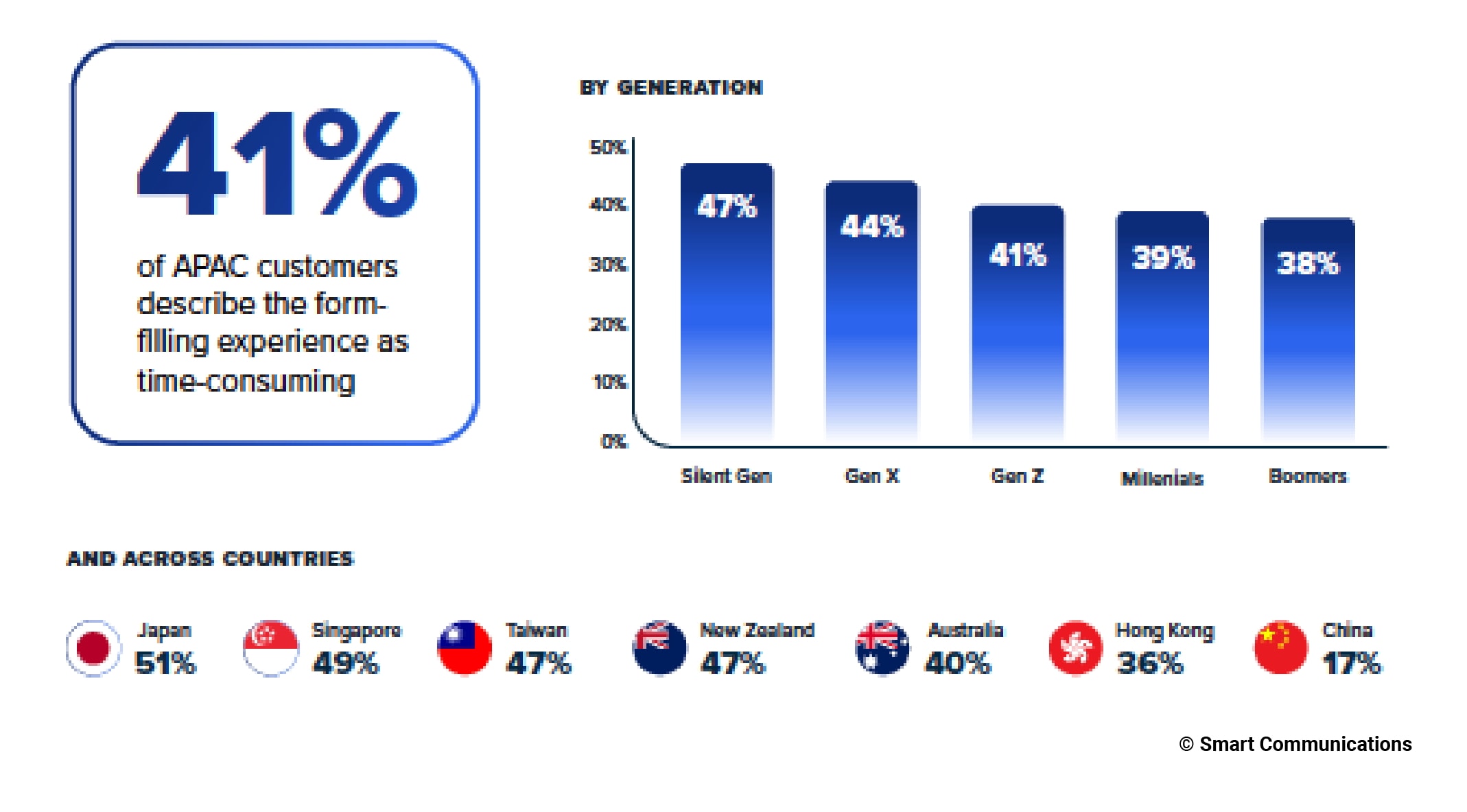
Manual or PDF-based processes don’t just slow things down; they frustrate customers and erode trust. Each inefficient form or manual handoff signals to customers that a brand isn’t keeping pace with their digital lives. In fact, nearly half of Singaporeans describe the form-filling experience as time-consuming (see chart below).

Quick Tip: Treat every data collection step as a chance to demonstrate ease, trust, and digital maturity.


2. Strong Communications Drive Stronger Loyalty

82% of Singaporeans are likely to recommend a provider if communications exceed expectations — the third highest globally of 12 countries surveyed.

Great communications don’t just build loyalty, they drive growth. When messages are timely, relevant, and personal, customers are far more likely to stay engaged and become advocates. The key is connecting the right data to the right message at the right time.

Quick Tip: Identify where personalisation can have the biggest impact. Do you have the mechanisms in place to collect, govern, and use that data effectively?


3. The Experience Gap Is Real

Only 49% of Singaporeans rate their communications as “very good” or “excellent,” compared to 61% globally.

Despite Singapore’s leadership in digital adoption, too many enterprises are still held back by legacy systems, data silos, and fragmented infrastructure. These limitations make it difficult to respond quickly, personalise effectively, or ensure consistency across channels.

Quick Tip: Conduct a CX audit across three dimensions: speed, personalisation, and channel preference. Identify where legacy systems are slowing you down.


4. The AI Opportunity Starts with Reliable Data

71% of Singapore consumers believe AI will improve customer experiences, compared to 61% globally.

Singaporeans are optimistic about AI, but readiness doesn’t always match enthusiasm. AI can only enhance customer experiences when the underlying data is accurate, accessible, and responsibly managed.

Quick Tip: Evaluate whether your current systems can support the speed and scale of AI-driven experiences. Legacy archives and data collection processes often can’t keep up. (Learn more in this article about archive strategy in the AI era.)


Bridging the Gap for Regulated Industries

For government agencies, banks, and insurers operating under strict regulatory frameworks, transforming the customer experience can feel like an impossible balance between innovation and compliance. But it doesn’t have to be.

That’s why Smart Communications has expanded its investment in Singapore with a new AWS-powered data centre — enabling local access to The Conversation Cloud™, the world’s leading Customer Engagement Platform purpose-built for highly regulated industries. (Read the press release.)

Designed with compliance, auditability, and governance at its core, the platform allows highly regulated enterprises to modernise with confidence — and to take advantage of practical, responsible AI that enhances productivity and personalisation without introducing risk.

Our approach to AI is grounded in transparency, control, and compliance — helping enterprises apply intelligence where it matters most, while staying within their regulatory guardrails. For Singapore’s financial institutions and government agencies, this means they can finally embrace AI safely, using data they can trust to deliver faster, more connected, and more human customer experiences.

Because the future of customer engagement in Singapore isn’t just about going digital — it’s about going smarter, safer, and faster.

Read more insights in the 2025 APAC Customer Conversations Benchmark Report.

Elevating Healthcare Provider CX: Key Insights from the 2025 Benchmark Report

By John Zimmerer, VP of Healthcare Marketing at Smart Communications

In addition to battling a host of existential crises, healthcare providers face mounting pressure to deliver seamless, personalized, and secure communication experiences. The 2025 Healthcare Benchmark Report from Smart Communications offers a comprehensive look into how patients perceive their interactions with healthcare organizations—and what providers must do to meet rising expectations.

This blog post distills the most critical findings from the report and explores how Smart Communications’ Conversation Cloud can empower providers to transform their customer experience (CX) strategies, improve operational efficiency, and build lasting patient trust.

The State of Healthcare Communications in 2025

The benchmark report, based on a global survey of 3,000 consumers, reveals a healthcare landscape in flux. While satisfaction with healthcare communications has improved—up 75% since the last benchmark—patients still report significant gaps in digital engagement, data transparency, and omnichannel consistency.

Key Findings for Providers:

1) Omnichannel Experience Gaps

  • Only 54% of patients are satisfied with their omnichannel experiences.
  • 71% prefer digital self-service over calling or visiting in person.
  • Channel preferences vary widely by region and generation, with email, SMS, encrypted messaging, and web portals all playing critical roles.

2) Trust Hinges on Consistency

  • 60% of patients trust healthcare organizations more when experiences are consistent across channels.
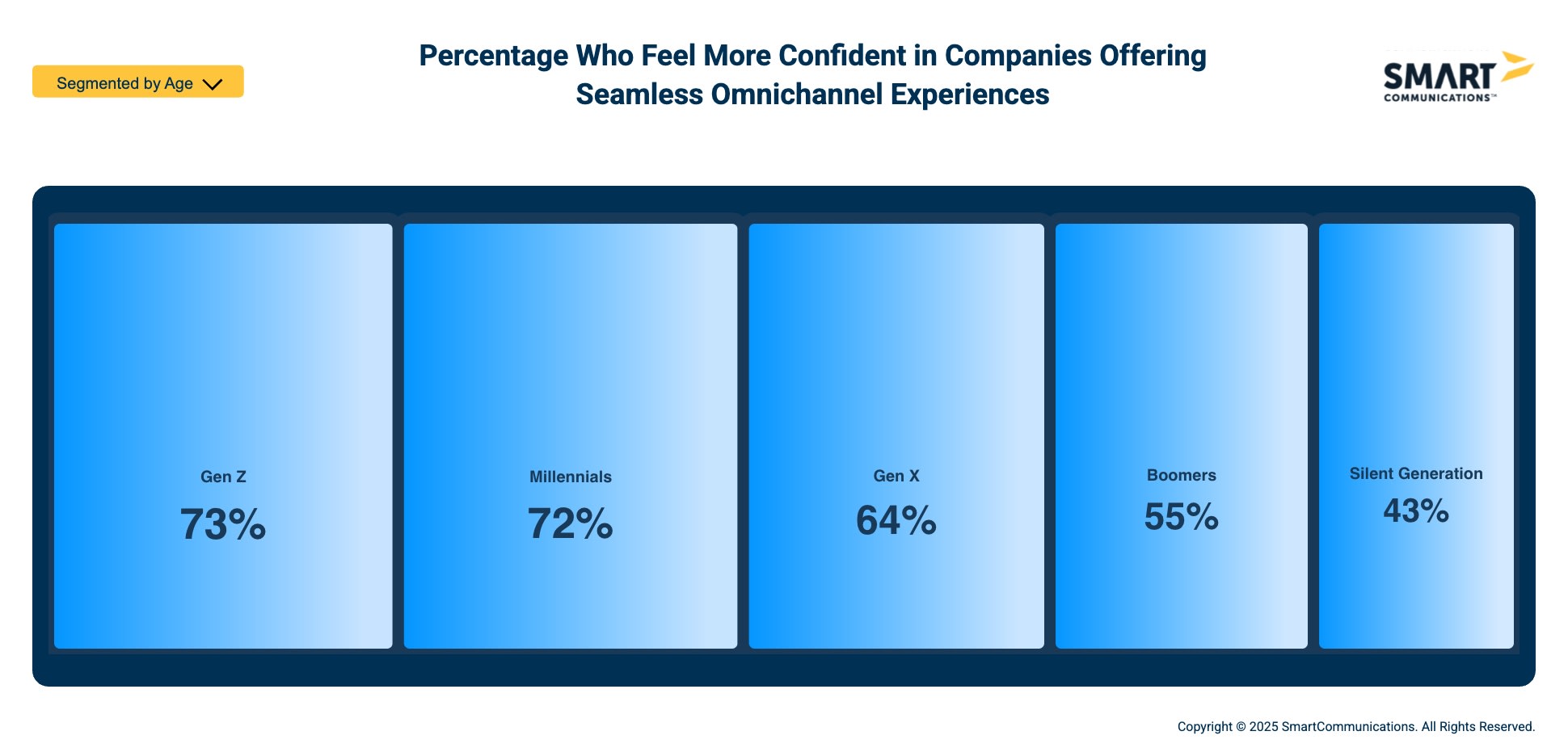
  • This trust is especially high among Gen Z (73%) and in German-speaking countries (76%).

3) AI Adoption and Transparency

  • 54% of patients are open to AI-driven health recommendations.
  • However, 32% still express concerns about data security, and 31% worry about ethical AI use.

4) Communication Drives Loyalty

  • 84% say communications are central to their overall experience.
  • 67% would switch providers if communications don’t meet expectations.

These findings underscore a critical truth: communication is care. Providers who fail to modernize their engagement strategies risk losing patients—not just to competitors, but to frustration and disengagement.

The Provider Imperative: Modernize or Fall Behind

Healthcare providers are uniquely challenged by legacy systems, fragmented workflows, and regulatory complexity. Yet, patients increasingly expect the same frictionless experiences they receive from retail, banking, and tech brands.

To meet these expectations, providers must:

  • Automate and streamline data intake and form processes.
  • Deliver personalized, omnichannel communications that feel like one continuous conversation.
  • Build trust through transparent data practices and ethical AI use.
  • Ensure accessibility and compliance across all touchpoints.

This is where Smart Communications’ Conversation Cloud becomes a game-changer.

How the Conversation Cloud Solves the Provider CX Puzzle

The Conversation Cloud is a purpose-built platform designed to help healthcare organizations engage in smarter, more meaningful conversations with patients. It includes four integrated solutions:

  • SmartIQ™ – Digital forms and guided experiences
  • SmartCOMM™ – Personalized, omnichannel communications
  • SmartPATH™ – Journey orchestration and automation
  • SmartHUB™ – Centralized communication archive and retrieval

Let’s explore how each component addresses the report’s findings.

1. SmartIQ™: Closing the Digital Self-Service Gap

With 71% of patients preferring digital self-service, SmartIQ enables providers to replace outdated paper forms and manual intake processes with intelligent, mobile-friendly experiences.

Benefits for Providers:

  • Accelerates preregistration, consent, and financial assistance workflows.
  • Reduces staff burden and administrative errors.
  • Improves accessibility with multilingual and ADA-compliant forms.

By digitizing data collection, providers can meet patients where they are—on their devices—and create a smoother, more welcoming entry point into care.

2. SmartCOMM™: Delivering Personalized, Omnichannel Communications

SmartCOMM empowers providers to create and deliver communications that are personalized, compliant, and consistent across channels—email, SMS, print, portals, and more.

Benefits for Providers:

  • Ensures brand and message consistency across touchpoints.
  • Supports HIPAA-compliant communications with encryption and audit trails.
  • Enables personalized content based on patient preferences and data.

With SmartCOMM, providers can turn routine communications—appointment reminders, test results, billing notices—into moments of connection and trust.

3. SmartPATH™: Orchestrating the Patient Journey

SmartPATH helps providers design and automate communication journeys that guide patients through complex processes like referrals, chronic care management, and post-discharge follow-up.

Benefits for Providers:

  • Reduces drop-off and no-show rates.
  • Improves care coordination across departments and systems.
  • Enables real-time adjustments based on patient behavior and feedback.

This orchestration ensures that every interaction feels intentional and supportive, reinforcing the provider’s commitment to patient-centered care.

4. SmartHUB™: Centralized Communication Management and Analytics

SmartHUB provides centralized oversight of all communications, enabling providers to track performance, identify pain points, and continuously improve.

Benefits for Providers:

  • Offers analytics and dashboards to monitor satisfaction and engagement.
  • Supports A/B testing and iterative improvements.
  • Helps meet regulatory reporting requirements with built-in compliance tools.

With SmartHUB, providers can move from reactive to proactive CX management—aligning efforts with what truly matters to patients.

Building Trust in the Age of AI

The benchmark report highlights growing patient openness to AI—but also lingering concerns. Smart Communications addresses this by embedding transparency, security, and human oversight into every AI-powered interaction.

For example:

  • SmartCOMM uses AI to generate plain-language summaries of complex medical documents (think: discharge summaries, care plans, etc.).
  • SmartIQ can guide patients through forms using natural language prompts.
  • SmartPATH ensures that AI-driven journeys are auditable and explainable.

By leading with clarity and integrity, providers can harness AI to enhance—not replace—the human touch in healthcare.

Real-World Impact: Provider Success Stories

Several leading healthcare organizations have already leveraged the Conversation Cloud to transform their CX:

  • A large academic medical center reduced form completion time by 60% using SmartIQ.
  • A regional health system improved patient satisfaction scores by 30% after implementing SmartCOMM for appointment reminders and follow-ups.
  • A multi-specialty provider network used SmartPATH to automate post-discharge communications, reducing readmissions by 15%.

These outcomes demonstrate the tangible ROI of investing in smarter conversations.

The Future of Provider CX Starts Now

The 2025 Healthcare Benchmark Report makes one thing clear: patients are ready for better experiences. They want digital convenience, personalized communication, and ethical use of their data. Providers who rise to meet these expectations will not only retain patients—they’ll earn their trust and loyalty.

Smart Communications’ Conversation Cloud offers a proven path forward. By modernizing how providers engage, communicate, and orchestrate care journeys, it turns every interaction into an opportunity to deliver value, build relationships, and improve outcomes.

Click here to access an on-demand webinar where we dig deeper into the report.

Smart Spotlight: Maddie Lewis on Life at Smart

By Smart Communications 

At Smart Communications, we believe our greatest strength lies in our people, and our Smart Spotlight series is all about showcasing the talent, passion, and unique journeys that shape our culture. In this edition, we’re excited to introduce Maddie Lewis, our Vice President of Corporate Strategy.  

Since joining in 2022, Maddie has played a pivotal role in guiding key initiatives and fostering collaboration across the business—all while bringing curiosity, energy, and a drive for results to everything she does.  

Get to know Maddie as she shares her career journey, what inspires her at Smart, and how she’s making an impact both inside and outside of work. 

1. What is your role at Smart and how long have you been with the company? 

I joined in June of 2022 as the VP of Corporate Strategy. In my role, I support our Executive and Senior Leadership Teams in executing key strategic initiatives by providing cross-functional project management. It’s a fun role that gives me exposure to the entire business and an ability to ensure we’re focused on the initiatives and projects that will ultimately lead us to sustained success. 

2. What did you do for work prior to joining Smart, and why did you make the switch? 

Prior to joining SMART, I worked in management consulting with a focus on M&A, project & change management, and operational due diligence. While I loved the challenging projects and the breadth of industries and lines of business I was exposed to with consulting, I felt like I was missing the satisfaction that comes with working alongside a consistent team in an environment where you experience longer-term change and results. Consulting lends itself to delivering high–value results for multiple end clients across multiple projects – here at SMART I can apply my consulting knowledge and experience to drive results to a consistent team while gaining deeper knowledge about our business.   

3. What’s kept you at Smart? 

It’s no surprise that a common answer across all my colleagues at SMART is “the people.” I get to work with some of the brightest minds that challenge me and push me to constantly be learning and ensuring we continue to deliver gold–standard results. Not only am I challenged, I’m constantly encouraged and truly find joy in working with everyone at Smart. I also believe in our products and can see real-life value being driven for our customers, which makes any internal initiatives even more exciting knowing that ultimately, they will drive greater and better outcomes for our customers. 

4. What skills are needed to be successful in your role/on your team? 

Relentless curiosity. Understanding that the market is constantly evolving and changing. Therefore, asking how we as a business need to adapt and change to ensure we are setting our employees and customers up for success. Also, being OK with ambiguity while asking questions to ultimately drive clarity across the business.   

Ability to drive execution. Being able to balance long-term strategic goals while driving execution to ensure the company achieves our goals and they are not just left at goals. This means being able to articulate our strategy into actionable next steps. 

Collaboration. Strategy only works as long as the business functions are aligned and working towards the same objectives. Driving cross-functional collaboration and alignment is key in overall success of any strategic initiative. 

5. What’s your favorite aspect of your job? 

What I love most is working with smart, passionate people to solve tough problems and then seeing those solutions turn into real results for our employees and customers. 

6. What are you doing when you’re not working? 

Shortly after starting at Smart, my husband and I moved to the Upper West Side of New York City. When I’m not working, I love exploring the city – walking through Central Park, catching the ballet at the Lincoln Center, or trying a new fun restaurant. I also love traveling and staying active through hiking, swimming, and fly fishing.


If you’re interested in joining our dynamic team, we invite you to explore our current opportunities on our Careers page. 


Your Archive Strategy Isn’t Ready for the AI Era

By Scott Draeger, SVP of Product Marketing and Vertical Solutions at Smart Communications 

When you think about what you archive, you expect your data to be static, stored, and tucked away. But in an environment of constant disruption, your archive needs to be searchable, connected, and ready on demand. 

Too often, organizations assume their archive solution still offers predictable costs, proven technology, and lasting relationships. That’s the complacency talking, because your archive systems and strategies have likely been in place for 10-plus years.  

Your archive and retrieval strategy is probably not ready for the AI Era, and it needs your fresh thinking now. Trends toward customer self-service and AI summarization technology put retrieval-optimized archive technologies like SmartHUB™ in position to transform your organization when legacy approaches may fail to scale while costing you more than you anticipate. 

Why Is Older Technology Problematic?

If you’ve had your archive technology longer than a full retention period, you may consider it reliable and dependable. This may have been true for the scale you operated at when your predecessors initially selected the technology, but a lot has changed since then.  

Most archive solutions deployed around the time of the Sarbanes-Oxley Act were architected around the challenges of the day, which were rising retention periods and high storage costs. The use cases of that era focused mainly on storage and less on retrievals, so they missed opportunities to: 

  • Incorporate metadata for better search and context
  • Manage multiple file formats
  • Reduce retrieval times 

As the context window of LLMs increases, so does the LLM’s appetite for data, documents, and attachments. Some legacy systems attempt to mask these limitations by adding real-time cache technology that sits on top of the legacy architecture. This introduces complex data mapping and prevents your archive from being a single source of truth. 

Today, customers requesting a document from an archive system have attention spans that are in the hundredths of a second. As your CX and Operations teams demand you move more of your customer experiences to self-service, your retrieval needs will exponentially increase. You may be archiving more types of communications from a wider variety of channels. When you add AI summarization to the mix, you may be summarizing thousands or tens of thousands as many documents. This strain will inevitably test your system, adding further delays that erode customer trust. 

Why Will Costs Be Unpredictable?  

Legacy archive solutions were priced around the assumption that storage activity was common, and retrieval activity was rare. To offer more predictability to clients, models about the ratio of storage to retrieval drove pricing discussions. Since storage outnumbered retrievals, vendors and customers agreed that focusing the discussion on storage resulted in a more predictable arrangement for both parties. The storage to retrieval ratio was thousands, or even tens of thousands, to one. 

As organizations look to reduce costs through automation and self-service, the archive’s storage to retrieval ratio starts to change. Customers are using the portal to look at documents and communications in the archive to verify a transaction, share information, or understand more before they expand their relationship. The more they look at older records, the more retrievals they create. Add in AI summarization, and now an AI Agent may read five to 20 documents from your archive to answer a question. This could boost retrieval activity hundreds, or even thousands, of times. 

If your legacy offering attempts to offer a real-time cache solution to reduce retrieval costs, that complexity will come with an additional price tag. As your complexity increases, so does your budget. 

What About My Valuable Vendor Relationships? 

As you look at your legacy technology provider, you may put a lot of value on the relationships you have with your account team. But if your account team hasn’t helped you plan for the impacts that customer self-service and AI summarization place on your archive system, they may not be the best partner. In fact, your account team may eagerly anticipate your CX and AI initiatives, because an extra zero (or two, or three, or four) on your retrieval counts might be the expansion that gets them to President’s Club. 

There’s a Better Way Forward 

The challenges with legacy archive systems aren’t insurmountable—rather, they require a fundamentally different approach. Sophisticated archive solutions like SmartHUB enable rapid migration, migrating hundreds of millions of pages (or more) per week with scalable cloud-based ingestion capabilities. You can retire your legacy technology in months, while bringing the benefits of retrieval–optimized archiving to your customers, employees, and even AI agents.  

To learn more about how Smart Communications helps customers bring their archive and retrieval strategy into the AI era, check out the video below and request a demo of SmartHUB today. 

Our Next Move: Accelerating the Future of Customer Conversations

By Leigh Segall, CEO at Smart Communications

Every great company has defining moments — the milestones that mark not just progress, but transformation. Today is one of those moments for Smart Communications. 

With the official close of our acquisition by international private equity firm Cinven, we continue to build on our strong foundation and unstoppable momentum — entering this next chapter not as a company preparing for growth, but as one already driving it. This partnership will fuel our trajectory, helping us reach even greater heights in innovation, scale, and impact. 

Cinven’s investment signals a deep conviction in our vision: that customer engagement in regulated industries can, and should, be smarter, more connected, and more human. Their global experience scaling technology leaders further strengthens our ability to accelerate that vision and continue setting the standard for what enterprise engagement should be. 

But make no mistake — this isn’t a new direction. It’s an acceleration of the success, leadership, and innovation that defines who we are.

A Future Built on Trust 

For more than two decades, Smart Communications has led the evolution of customer communications — helping the world’s leading enterprises simplify complexity, modernize operations, and deliver customer experiences that build trust. 

We’ve done this by anticipating what’s next — being first to market with a cloud-native CCM platform, expanding into intelligent data collection, and, most recently, launching solutions like SmartHUB™ and SmartPATH™ that have redefined what enterprise-grade engagement looks like in the AI era. 

This foundation — built on trust, innovation, and deep industry expertise — is what attracted Cinven to our business. They see what our customers see: a company already shaping the future of customer engagement and leading this market forward. 

“The conversation around customer communications has changed more in the past three years than it did in the previous decade. Artificial intelligence, automation, and data-driven engagement have captured every boardroom’s attention. Yet beneath the optimism lies a fundamental reality: innovation in customer communication is no longer about experimenting with new tools. It is about orchestrating the entire communication ecosystem so that intelligence, compliance, and customer experience operate in complete sync.” 

—Saurabh Raj, Principal Analyst at QKS Group  

This is the world Smart Communications is already enabling. While others are still defining what this new era means, we’ve been executing it — helping enterprises move from static communication management to intelligent communication orchestration, where every interaction is adaptive, explainable, and trustworthy.

Accelerating What Matters Most 

As we enter this next phase, our focus remains crystal clear: 

  • Advancing our technology with continued investment in AI, automation, and secure cloud innovation that delivers measurable value to our customers.
  • Expanding globally to meet rising demand for compliant, digital-first customer conversations in every market we serve.
  • Driving meaningful outcomes by helping highly regulated enterprises modernize legacy systems, reduce operational friction, and orchestrate connected experiences that build lasting trust. 

“Together with Smart Communications, we see tremendous opportunity to shape the next phase of enterprise customer engagement,” said Thomas Railhac, Partner and Head of TMT at Cinven. “This partnership is about scaling a proven platform, deepening innovation in AI and cloud, and helping customers around the world deliver smarter, more connected experiences.” 

Together, we can move faster, scale further, and deliver more impact than ever before — while staying true to what makes Smart Communications unique: our customer focus, our purpose-built technology, and our people.

Momentum for the Future

2025 has been a year of extraordinary momentum. We’ve launched two major new solutions, deepened our partnerships with global powerhouses like AWS, Salesforce, and Guidewire, and welcomed a growing number of enterprise customers — including some of the world’s most recognized brands. Just as importantly, we continue to earn the trust of long-standing customers who have partnered with us for a decade or more, reaffirming the strength and longevity of our relationships and the measurable value we deliver year after year. 

These milestones reflect more than growth — they represent clarity of purpose. As the lines between customer communications, experience management, and service interactions continue to blur, Smart Communications is already serving as the connective tissue between them. From generation to orchestration to compliance, we’ve unified the conversation layer, helping enterprises deliver interactions that are not only intelligent, but explainable and human at their core. 

We have the platform, the expertise, and the conviction to lead the industry forward. And we have a community of customers and partners who continue to inspire us every day with the bold moves they’re making to transform how they engage with the people they serve.

The Best Is Yet to Come 

This moment is a celebration — of our team, our customers, and the trust we’ve built together.  

With Cinven’s partnership, we are accelerating what’s already in motion. Scaling faster, innovating deeper, and expanding our impact across every industry we serve. 

Together, we’re writing the next chapter of the Smart Communications story. One defined by bold thinking, meaningful innovation, and the drive to make every customer interaction smarter than the last. 

We’ve built this momentum. Now, with Cinven, we’re taking it even further. 

The best is yet to come. 


SmartCOMM™ vs. Legacy Communication Systems: A Buyer’s Guide

By Smart Communications 

When organizations evaluate customer communication systems/tools/software/technology, the decision often comes down to whether to maintain legacy systems or move to a modern, unified solution. Legacy tools may have been sufficient in the past, but today they can create complexity, higher costs, and slower response times. 

In this blog, we compare legacy approaches with SmartCOMM, and outline the differences in efficiency, scalability, and compliance. The goal is to give you a clear, factual framework to support your CCM vendor evaluation. 

What Is SmartCOMM? 

SmartCOMM is an enterprise-level, cloud-based customer communications management (CCM) solution designed to streamline how organizations create, manage, and deliver communications. It replaces fragmented, multi-vendor setups with a single solution that supports both document generation and omnichannel delivery. 

By integrating with existing systems, SmartCOMM helps ensure your customer communications are accurate, consistent, personalized, and compliant. It also adapts easily as business needs, customer expectations, and regulatory requirements evolve. 

Why Legacy Communication Systems Fall Short 

Legacy CCM systems typically rely on disconnected tools to handle print, email, SMS, and archiving. While workable, these setups often create hidden costs and operational inefficiencies that limit growth. 

Other notable challenges with legacy CCM systems include: 

  • High IT overhead: Multiple contracts, upgrades, and maintenance cycles drain resources.
  • Compliance gaps: Disconnected workflows increase the risk of errors and inconsistencies.
  • Slow time-to-market: Making updates can take weeks or months due to siloed processes.
  • Fragmented experiences: Customers receive communications and documents that lack consistency across channels. 

SmartCOMM vs. Legacy CCM Systems: A Side-by-Side Comparison 

Feature 

Legacy Systems 

SmartCOMM 

Inputs 

Manual data entry, limited integrations 

API-based; integrates with core business systems 

Outputs 

Print-heavy, siloed channels 

Omnichannel: email, SMS, portals, print 

Compliance 

Manual checks, higher error rates 

Centralized rules, automated compliance 

Scalability 

Difficult to adapt 

Cloud-based, scales with demand 

Time-to-Market 

Weeks or months 

Days or hours 

User Experience 

Inconsistent and fragmented 

Personalized, consistent, real–time 

Why Buyers Choose SmartCOMM 

Consolidating wtih SmartCOMM has been shown to reduce costs, improve compliance, and deliver better communications. Keep reading to see how one of our customers did just that. 

Case Study: Priority Health 

Priority Health, a leading health insurer, modernized its communications infrastructure with SmartCOMM™. This transformation led to: 

  • 80% Reduction in Development Time: Streamlined claims and authorization processes, significantly cutting down the time required for development.
  • Positive Return on Investment (ROI): Achieved a favorable ROI through enhanced operational efficiency and reduced costs. 
  • Eased IT Administrative Burden: Simplified IT management, allowing internal teams to focus on strategic initiatives rather than routine maintenance.
  • Significant Reduction in External Vendor Costs: Lowered reliance on external vendors, leading to substantial cost savings. 

Looking ahead, Priority Health plans to integrate more documents into SmartCOMM, collaborate with their marketing team for digital transformation, and utilize SmartIQ for enhanced interactive communication and data collection 

To learn more, check out the video below:

See SmartCOMM in Action

Ready to compare for yourself? Schedule a demo and see how you can replace your legacy systems with a modern, unified communication platform. The best part? SmartCOMM demos take less than 30 minutes, are no obligation, and completely free! 

Frequently Asked Questions 

Q: What makes SmartCOMM different from legacy CCM systems? 
SmartCOMM unifies communication and document generation in one system, while legacy systems rely on multiple disconnected tools. 

Q: What formats does SmartCOMM support for input and output? 
SmartCOMM integrates with core business systems using APIs, batch files, or real-time data feeds. On the output side, it supports true omnichannel delivery — including email, SMS, secure portals, and print — ensuring consistent and personalized customer experiences across all touchpoints. 

Q: How difficult is it to migrate to SmartCOMM from a legacy system? 
While any migration requires planning, SmartCOMM is designed to make the transition as smooth as possible. The platform offers flexible integration options, proven implementation methodologies, and expert support to guide teams through the process. Many organizations are able to phase the migration, starting with high-impact use cases and scaling over time. The result is a streamlined communications ecosystem with significantly lower long-term complexity and cost. 

Q: How does SmartCOMM handle compliance?  
SmartCOMM ensures compliance by centralizing rules and automating compliance checks, significantly reducing manual errors and associated risks. By consolidating your communications ecosystem onto a single cloud-based platform, organizations can improve internal efficiency and decrease reliance on IT teams. Regulatory language can be maintained and updated seamlessly across your entire communication portfolio from one place, ensuring consistency and accuracy. Built-in approval workflows, audit trails, and locked regulatory content blocks provide additional safeguards, giving teams confidence that all communications meet compliance standards while streamlining the review and approval process.  

Q: Can SmartCOMM scale as my organization grows?  
Yes. SmartCOMM is cloud-native and built to adapt to increasing volume and evolving needs. 

Top Customer Experience Stats in 2025: Forms & Communications

By Smart Communications 

As you’re thinking about planning and strategy in the year ahead, here’s a quick-hit roundup of some of the most compelling insights from Smart Communications’ 2025 Global CX Benchmark Report—broken into two critical categories: forms and communications. 

Communications 

  1. 84% of customers say communications impact their overall experience with a company—this jumps to 88% among Millennials and 89% in markets like the U.S. and Singapore. 
  2. 75% say communications directly influence their satisfaction with a company. Nearly half (48%) say it drives loyalty—with the U.S. leading at 54%. 
  3. A striking 67% say they’d switch providers if communications don’t meet expectations. That’s up from 51% in 2023—a 16-point jump in just two years. 
  4. 78% say they’d recommend a company if communications exceed expectations. 
  5. Only 62% currently rate the communications they receive as “good” or “excellent”—despite massive investments in CX tech. 
  6. Trust is on the line: Just 63% say they trust their providers most of the time. This dips to 57% among Gen Z. 
  7. 60% of consumers trust companies more when communications are consistent across channels—and younger generations care even more (Millennials: 68%). 
  8. Preferred channels: 
    • Email (43%)
    • SMS (18%)
    • Web/app-based communication (13%).  
  9. Response time matters most in good communications—cited by 89% globally. 
  10. AI’s role is growing: 
  • 61% believe GenAI will improve CX
  • 46% want a human in the loop to check content AI generates
  • 53% see faster response times as AI’s biggest benefit in communications 

11. Channel usage gaps exist across industries (e.g., only 56% of banks use preferred channels, and this is down from 60% in 2024).

12. Generational views differ (e.g., Millennials are most likely to recommend a company based on comms).

13. Trust levels vary by region (e.g., trust highest in USA at 71%, lowest in Australia at 59%).

14. Only 54% overall are satisfied with omnichannel experiences.  

15. GenAI confidence gaps linger (only 46% confident it handles info securely). 

16. AI usage transparency matters to 37%. 

17. Only 13% think GenAI is better than humans at communications. 

18. Biggest benefits of AI in comms: faster responses (53%), accuracy (44%), cost savings (42%). 

19. Top concerns with AI: privacy (49%), lack of human oversight (43%), potential errors (39%). 

Forms/Data Collection 

  1. 66% of people say they’d abandon an interaction entirely if a form is too hard to complete. 
  2. The most important features in a form are: 
    • 92% demand 100% security 
    • 90% want it fast and easy 
    • 85% say only relevant questions should be asked 
    • 83% expect mobile/web-friendly design 
    • 84% want to save progress and return later 
  3. Frustration drivers include: 
    • Repeating info: 60% 
    • Redundant questions: 57% 
    • Lack of save/resume: 49% 
    • Paper/manual processes: 40%, higher among Millennials at 47% 
  4. If the data collection experience is positive: 
    • 64% say they’d stay loyal 
    • 56% would buy more 
    • 54% would leave a good review 
  5. 71% prefer digital self-service over calling—rising to 83% among Millennials. 
  6. 63% prefer guided digital forms over PDFs. This is even higher among Gen X and Boomers (67% each). 
  7. 77% say digital intake is important—especially in healthcare (79%) and among Millennials (84%). 
  8. 66% consider data collection a form of communication. 
  9. Form updates matter: 
    • Over 50% want status updates after submission. 
    • In healthcare specifically, 51% actively want to know the status of their submitted forms. 

10. When people inquire about the status of a request, most still rely on email (44%) or phone (45%). Chatbots remain underused, at just 9–12% usage. 

11. Real-time help desired by 81%. 

12. Status updates post-submission matter to 83%. 

13. Guided digital forms preferred by 63%. 

14. Form issues drive drop-off: too time-consuming (57%). 

15. Too hard to upload documentation: 62% abandon. 

16. Forms are described as time-consuming by 41%. 

17. Forms are a method of communication according to 66% of respondents. 

18. Self-service is preferred by 71% overall. 

19. 79% of healthcare consumers say digital intake matters. 

20. 56% would engage with an organization more if the intake process exceeds expectations. 

Quick Recap and Takeaways of the 2025 CX Benchmark Research 

  • Forms that frustrate users drive immediate drop-offs. Even one confusing step can push users to give up—permanently. 
  • AI-powered customization during intake builds trust—but only if it’s clearly explained and ethically implemented. Over 40% still worry about data privacy and human oversight. 
  • Poor communications fuel churn. It’s no longer just about what you say—but how fast, how clear, and how personal it is. 
  • Consistency across channels isn’t a nice-to-have—it’s a trust builder. Younger generations especially expect seamless, cross-channel experiences. 

Why These 2025 Stats Matter Across Industries 

Customer expectations are rising across the board—but what really matters differs slightly depending on your industry. Here’s how the findings play out in four key sectors: 

Insurance: Retention Is on the Line 

  1. Only 23% of insurance customers say they are very satisfied when making account or policy changes. 
  2. 55% say insurers communicate on their preferred channels—but 14% say they rarely or never do. 
  3. 45% of insurance customers still rely on phone calls for status updates, while email matches at 45%. Chatbots trail at just 9%. 
  4. If the data collection process exceeds expectations, 56% would recommend their insurer and 64% would remain loyal. 
  5. Data privacy and human oversight are major concerns for insurance customers: 
  6. 47% are concerned about privacy 
  7. 43% worry about lack of human involvement in AI-driven comms 

Takeaway: Personalized, omnichannel communications and streamlined digital intake are critical to both winning trust and avoiding churn in a competitive market. 

Get more exclusive insights in our full 2025 Insurance Benchmark Report. 

Financial Services: Communication = Confidence 

  1. Only 28% of FS customers are very satisfied with their experience making changes to their account. 
  2. Banks & FS providers are only hitting the mark 56% of the time when it comes to using a customer’s channel of choice—down from 60% in 2024. 
  3. Trust is fragile: Only 63% of customers say they trust their bank or FS provider “always” or “almost always.” That’s down from 68% last year. 
  4. 61% say they’d drop out of a form-based process if it’s too difficult. 
  5. When submitting forms, 43% want updates on their request status—but only 12% use chatbots to inquire. 

Takeaway: In Financial Services, clarity and confidence go hand-in-hand. Fast, secure, and intuitive interactions—especially around data collection—are table stakes. 

Watch the video below for more FS benchmark insights, then check out the full report. 

Healthcare: Data Intake Drives Loyalty 

  1. Only 24% of customers are very satisfied with their service when making changes to an account. 
  2. 51% of healthcare customers want status updates after submitting forms—more than any other industry. 
  3. 70%+ say they’d abandon a form if it’s too time-consuming or asks for the same information repeatedly. 
  4. 79% of healthcare customers say it’s important to offer digital data collection instead of manual processes. 
  5. Healthcare organizations lead in AI adoption willingness: 
    • 54% find AI-generated health advice valuable 
    • 57% of Millennials say AI-generated health recommendations would improve their experience 

Takeaway: Simplifying forms and communicating proactively—especially around coverage, claims, and status—can significantly improve satisfaction and trust. 

Discover more surprising stats in our full 2025 Healthcare Benchmark Report. 

Healthcare Communications Should Be Personalized and Prompt 

  1. Just 24% of healthcare customers are very satisfied with provider experiences when making account or information updates. 
  2. Email and phone are still dominant—but 57% of customers prefer communications via web, mobile app, or encrypted messaging. 
  3. 51% of healthcare consumers expect updates on form status, especially Gen Z and Millennials. 
  4. 63% of healthcare customers say they’re likely to use digital self-service for support tasks—rising to 73% among Gen Z and Millennials. 
  5. 81% of healthcare customers say they’re more likely to recommend a provider if communications exceed expectations. 

Takeaway: Healthcare organizations have an opportunity to deepen trust by offering fast, secure, and channel-flexible experiences—especially with younger, digital-first patients and members. 

For more insights into the research, including filterable views across geographies, demographics, and industries, access the full interactive Benchmark experience now.